
Meghalaya Travel Guide 2025: Shillong, Cherrapunji, Double Decker Root Bridge & Mawlynnong
Everything You Need to Know: By a first-time traveller to Northeast India
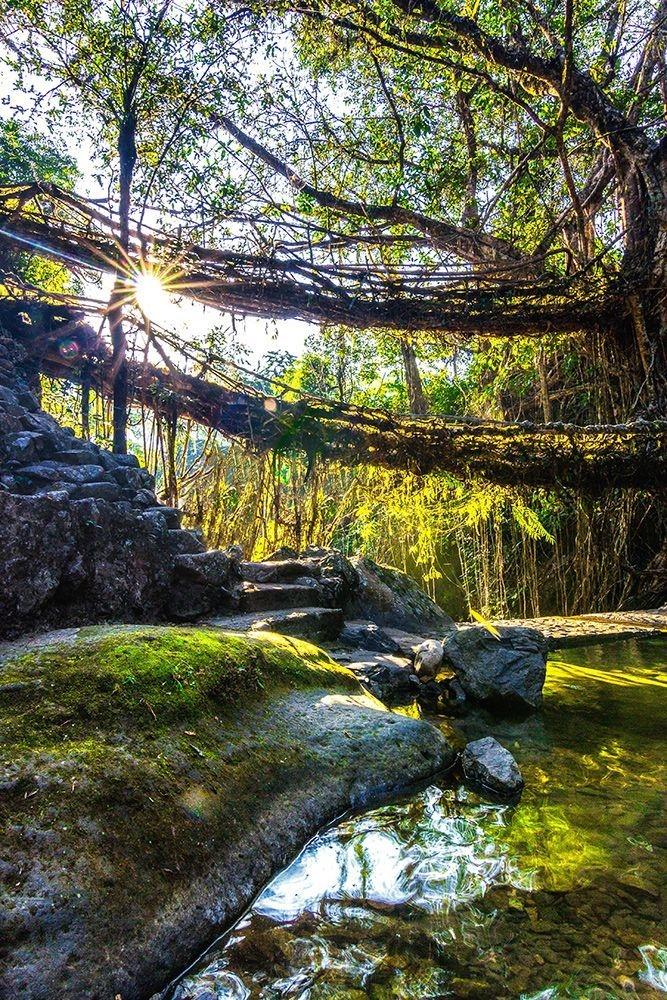
This is a complete Meghalaya travel blog for 2025, written from personal experience.
Connect with DigiLocker-verified local Meghalaya experts and solo travel companions on the Bhavrah app.
Why Meghalaya Should Be on Every Traveller's List
The name of the state Meghalaya means "Abode of Clouds". It is a small state in Northeast India. It is home to living root bridges, some of the wettest places on earth, ancient limestone caves, waterfalls so tall they disappear into mist, and cultural traditions that will genuinely amaze you.
The state is known as the Scotland of the East. The misty green hills do justice to it. If you're planning a trip to Shillong, a Cherrapunji tour, or looking for offbeat places to visit in Northeast India, Meghalaya is the answer.
Getting There: How to Reach Meghalaya
The most common route to reach Meghalaya is flying down to Guwahati airport (Assam), from where Shillong is roughly 100 km; about a 3 to 4-hour drive. Shared cabs and private taxis are both available from Guwahati to Shillong.
There is a domestic airport at Umroi, about 30 km from Shillong, but it receives very limited flights. Therefore Guwahati is your best bet.
October to April is best for pleasant weather and clear sightseeing. The Monsoon (June-September) is when the waterfalls are absolutely spectacular, but roads are not too perfect.
Shillong: The City That Doesn't Honk
The Shillong sightseeing experience starts the moment you pull into traffic and notice the silence. Nobody honks. Coming from any major Indian city, that alone feels like a reset.
Shillong is the capital of Meghalaya and one of the most underrated cities in India. It has a distinct personality, part colonial hill station, part Khasi cultural hub, fully its own thing. The streets are lined with small restaurants, local markets, and a general unhurried energy that's increasingly rare.
Shillong Viewpoint
One of the best things to do in Shillong is head to the Shillong viewpoint, a panoramic vantage point that gives you an uninterrupted spread of the entire city. Rooftops, hills, low-lying clouds and the whole skyline stitched together.
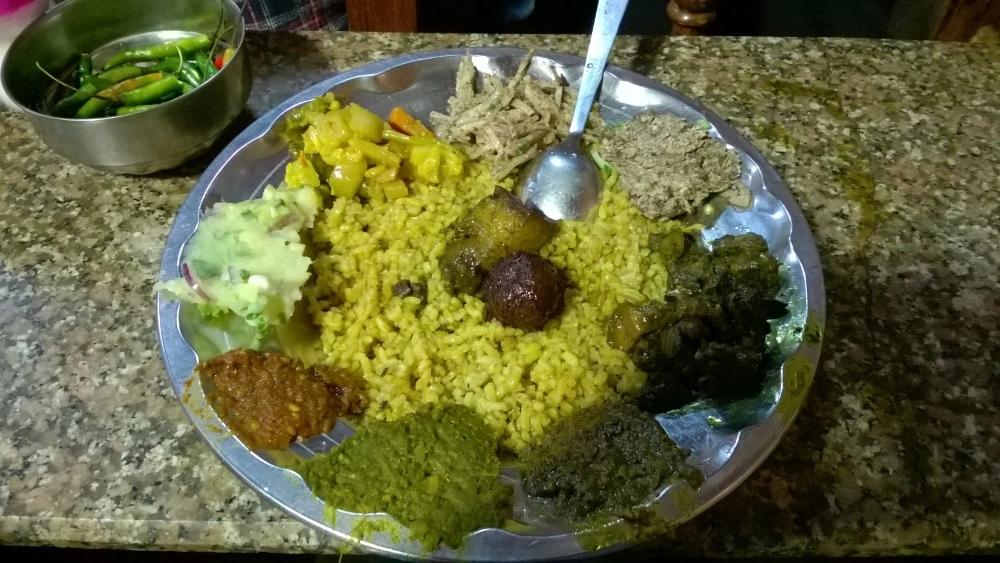
A must before leaving is eating at a local place and not a tourist restaurant. The Meghalayan food scene is simple but deeply satisfying: rice, pork, organic vegetables and local spices. There is a dish called Jadoh which is slow-cooked rice with pork and traditional Khasi spices that I've thought about multiple times since returning. Fresh tropical fruit is everywhere and cheap: pineapples, oranges, bananas, all roadside and genuinely good.
Cherrapunji (Sohra): Caves, Waterfalls & Living Root Bridges
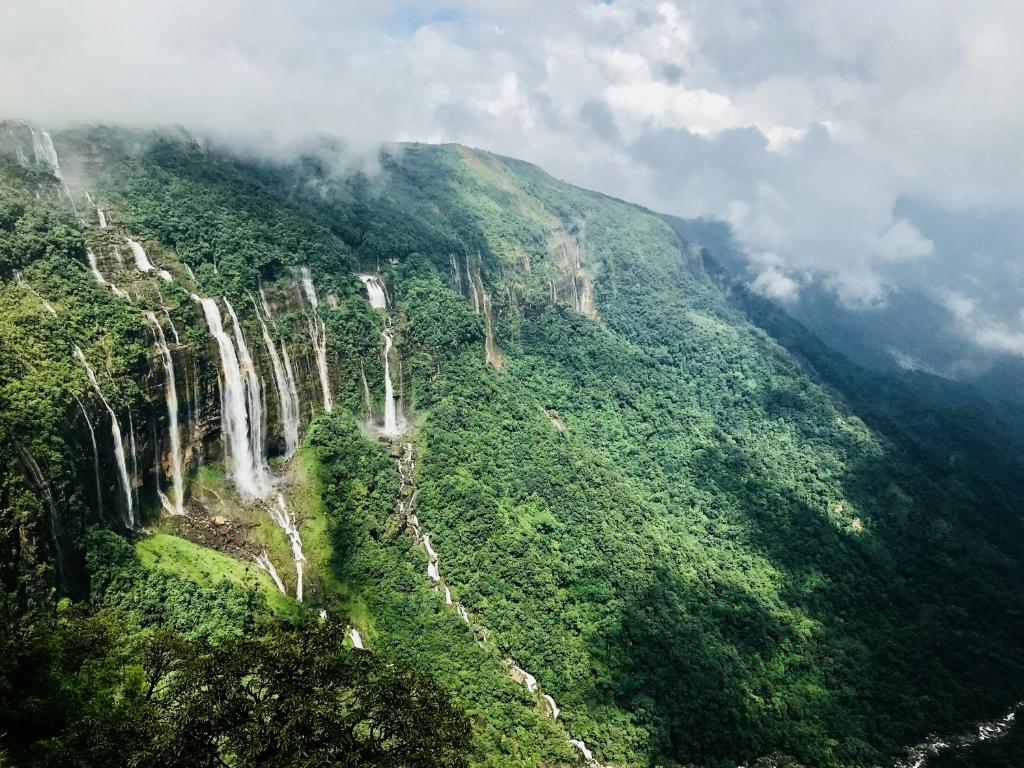
Cherrapunji, locally called Sohra, sits about 54 km from Shillong and is one of the wettest places on earth. It holds most of Meghalaya's iconic natural wonders, which is why nearly every Meghalaya itinerary routes through here.
Arwah Caves, Cherrapunji: A Must-Visit
The Arwah Cave is one of the most fascinating places to visit near Cherrapunji. The path leading to it is carved through dense vegetation already atmospheric before you're even inside. Once in, you're walking through nearly 450 metres of limestone formations: stalactites, stalagmites, columns that have been forming for millions of years.
The geological theory is that this region was once part of an ancient ocean floor. Local guides (highly recommended they know every inch of the place) will point these out toward the deeper sections, where the lit-up interiors create something between eerie and beautiful.
Double Decker Living Root Bridge: The Main Event
The Double Decker Living Root Bridge near Nongriat village, Cherrapunji is easily one of the most extraordinary things I've seen in person.
It's built entirely from the living aerial roots of rubber fig trees, trained and guided over generations by the Khasi tribe until the roots intertwined and became load-bearing. The Double Decker bridge is estimated to be around 200 years old and it's still growing which is amazing.
The double-decker part has a great origin story. The river below used to flood so badly in monsoon season that it would completely submerge the original bridge. So the Khasi elders simply grew a second level above it.
How to Reach & Trek Tips
Drive from Shillong or Cherrapunji to Tyrna village. This is the trek starting point. From Tyrna, you descend roughly 3,000 steps through dense forest to reach Nongriat village, where the bridge is located. It's approximately 3 km one way. The trek is moderate to challenging. Carry water, wear good shoes, and budget at least half a day.
- Start early to avoid afternoon heat and humidity
- Carry ORS and snacks (shops along the way exist but are pricier)
- The climb back up is harder than the descent: pace yourself on the way down
- There are basic homestays in Nongriat if you want to stay overnight
Mawlynnong: Asia's Cleanest Village
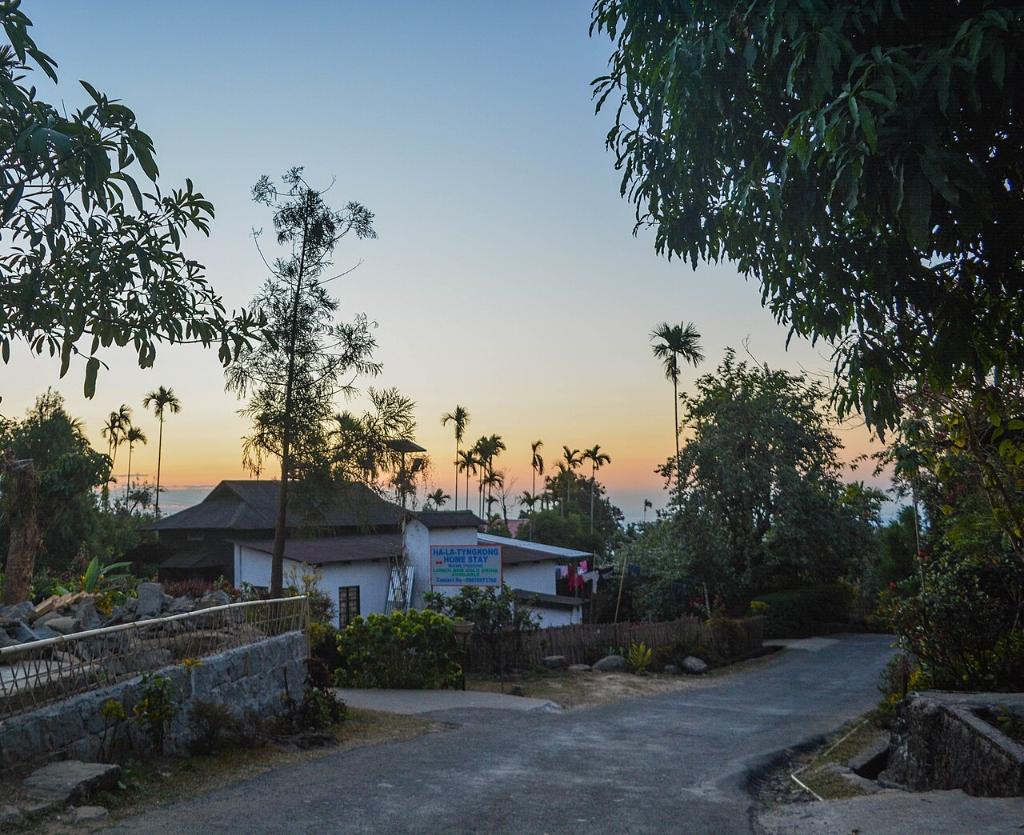
Mawlynnong, a village about 90km from Shillong near the India-Bangladesh border that was declared Asia's Cleanest Village by Discover India magazine in 2003. It's one of the most searched places to visit in Meghalaya, and for good reason.
You park outside since vehicles aren't allowed in and then you simply walk in. The first thing you notice is that there is nothing on the ground. No plastic, no wrappers, no litter. Bamboo dustbins shaped like cones, called khoh, line every lane. The paths are edged with flowers. It's immaculate in a way that doesn't look maintained rather looks lived.
Why Mawlynnong Is So Clean
The cleanliness in the village traces back to a cholera outbreak around 130 years ago, when village elders encouraged hygiene as survival. The community made it their identity. Every morning at 6:30 AM, children sweep the streets with handmade brooms before school.
Plastic is completely banned. Smoking carries a fine. Every household has had a functional toilet since 2007. The village composts its waste and practices rainwater harvesting using bamboo systems.
Population: ~900 people (Khasi tribe) | 100% Literacy Rate
Khasi Matrilineal Society: A Fascinating Cultural Fact
Here's something that makes Mawlynnong and Meghalaya genuinely different: the Khasi tribe follows a matrilineal system, one of the few such communities in the world.
- Lineage and inheritance pass through the mother's side.
- The youngest daughter called Ka Khadduh inherits the ancestral home and land.
- Children take their mother's surname.
- When a man marries, he moves into his wife's family home.
- A family without daughters is considered unfortunate, because there will be no one to carry the lineage forward.
Meghalaya Travel Tips: What to Know Before You Go
Minimum 4 days to cover Shillong, Cherrapunji, the root bridge trek, and Mawlynnong comfortably. 5-6 days is ideal.
Meghalaya is relatively budget-friendly. Local food is cheap and excellent. Private taxis or rented scooters (~₹650/day) give the most flexibility. Shared cabs connect major points.
Comfortable trekking shoes, a light rain jacket (it can rain anytime), reusable water bottles (plastic is banned in Mawlynnong), and cash since ATMs can be sparse.
Mobile signal is good in Shillong and Cherrapunji. In Nongriat village near the Double Decker Bridge, signal is minimal to none: download offline maps before you go.
Meghalaya tourism doesn't feel manufactured. The caves don't need dramatic lighting to impress you; they're already millions of years old. The root bridges don't need a brochure; they're literally still growing. Mawlynnong doesn't need a cleanliness drive; it's been this way for over a century. And Shillong doesn't need a marketing campaign, it just quietly exists at its own frequency.
Meghalaya Trip FAQs & Google Search Answers
Common questions travelers ask before visiting Shillong, Cherrapunji, Nongriat, and Mawlynnong.
Nisha documents authentic Indian travel destinations, local food cultures, and slow travel experiences on Bhavrah Travel Blog.